FoodConscious Mobile App Design
Designed a mobile app to help users reduce food waste and nudge them towards sustainable food eating habits.
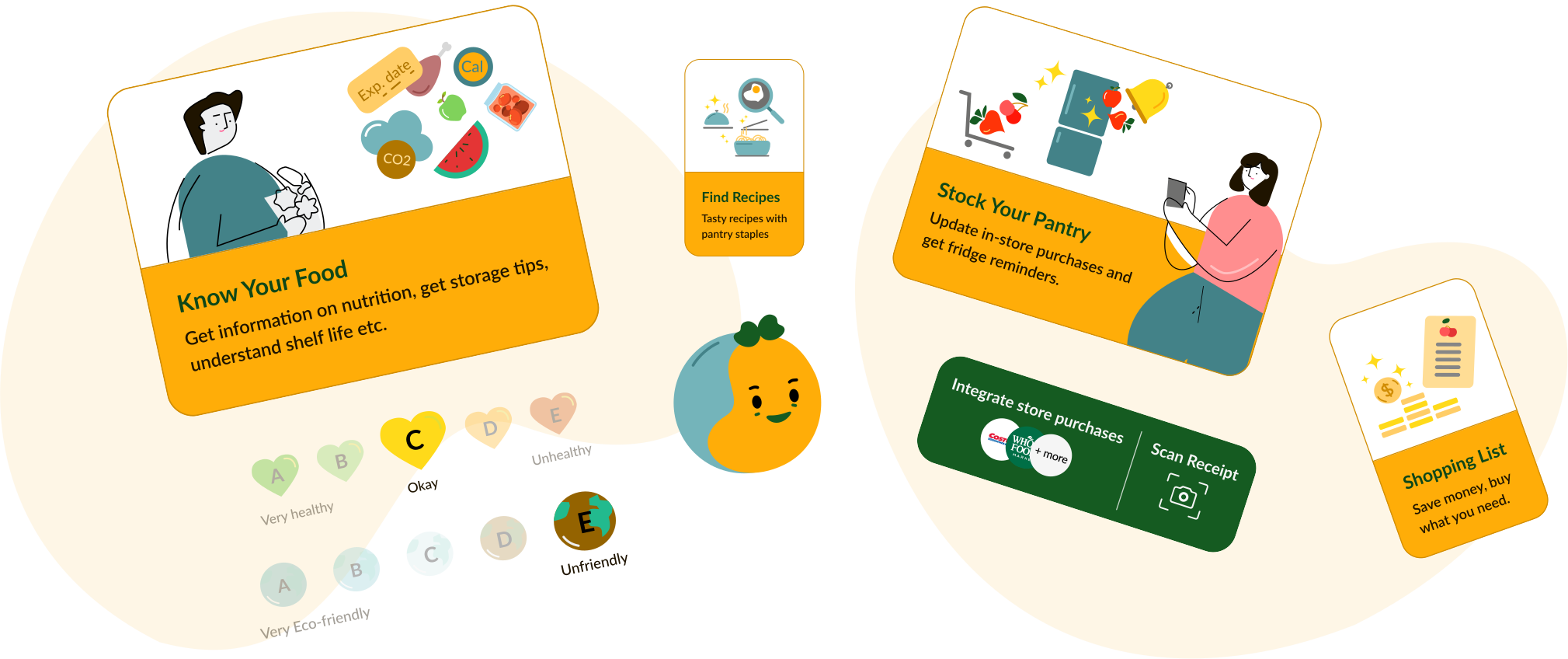
Overview
This project was done as a part of my thesis submission for Master’s Program at New York University, Interactive Telecommunication Program. I designed the ‘FoodConscious’ mobile app with features like ‘Auto-Loading Pantry’, ‘Finding Relevant Recipes’, ‘Storage Tips’ help users reduce the food waste happening at home.
My Contribution
UX Research, UX Design, Wireframes, User Test, Visual Design, Design System, HiFi Mockups
The Outcome
- Bring awareness to the impact of food waste on the environment.
- Help users reduce their food waste and adopt sustainable food eating habits.
The Problem
To understand why users waste food, I conducted 13 user interviews,
User Profile: 30-40yrs, Working Professionals, New York City/Jersey City Residents, Children: 0/1/2
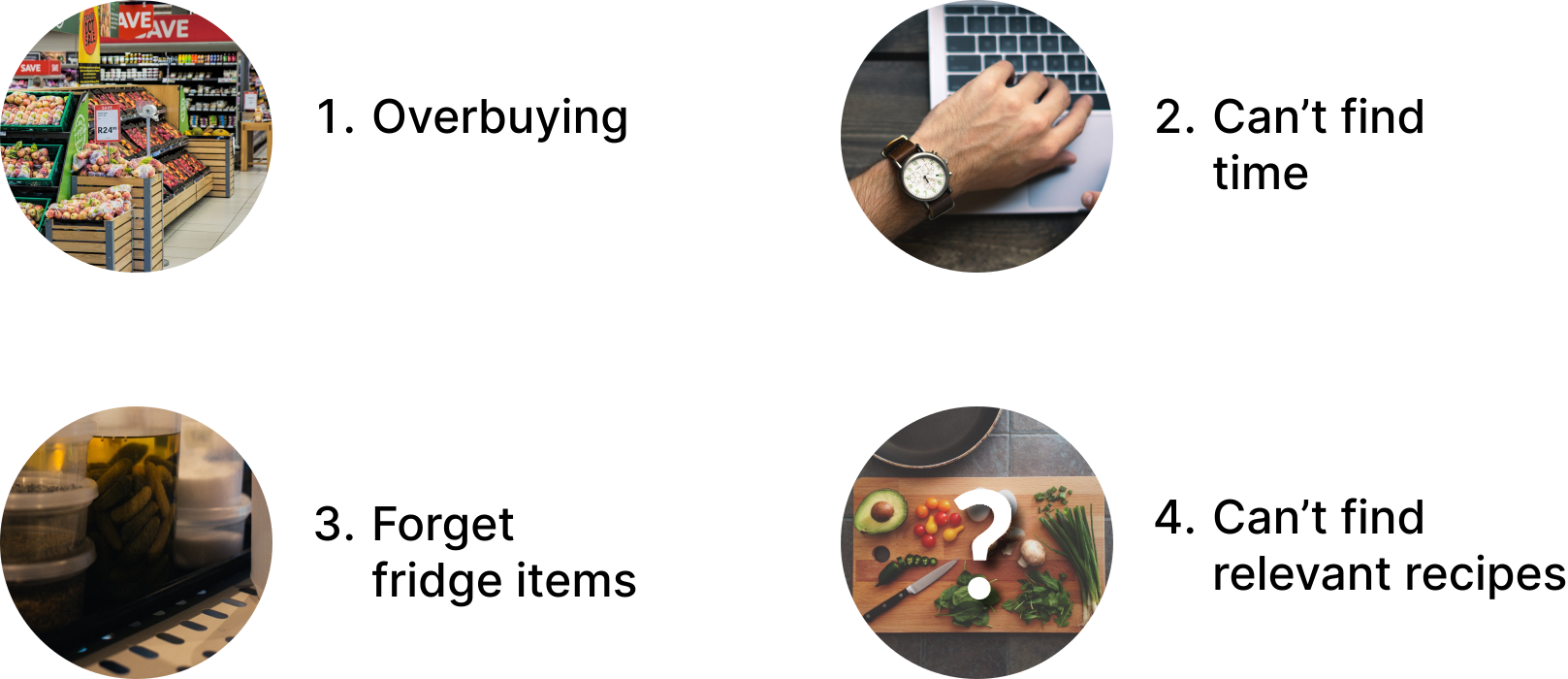
Key User Problems causing food waste at home.
"How might we help users reduce food waste and raise awareness on the impact of the ‘food they buy, consume and let go’ on the environment?"
Design Process
1. Design Ideation and User Feedback
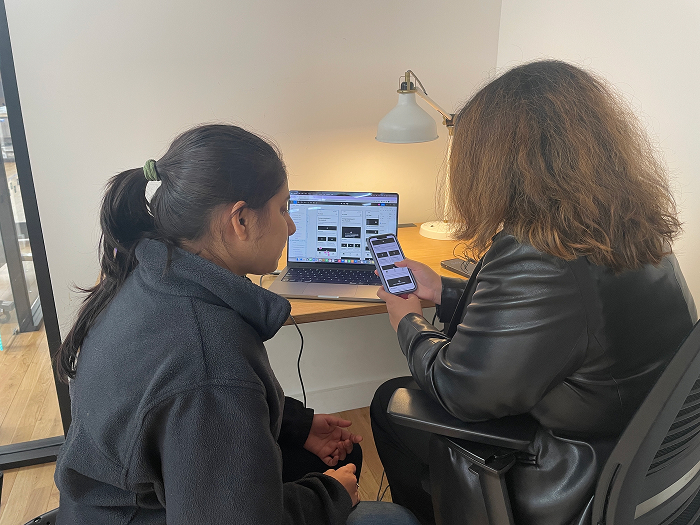
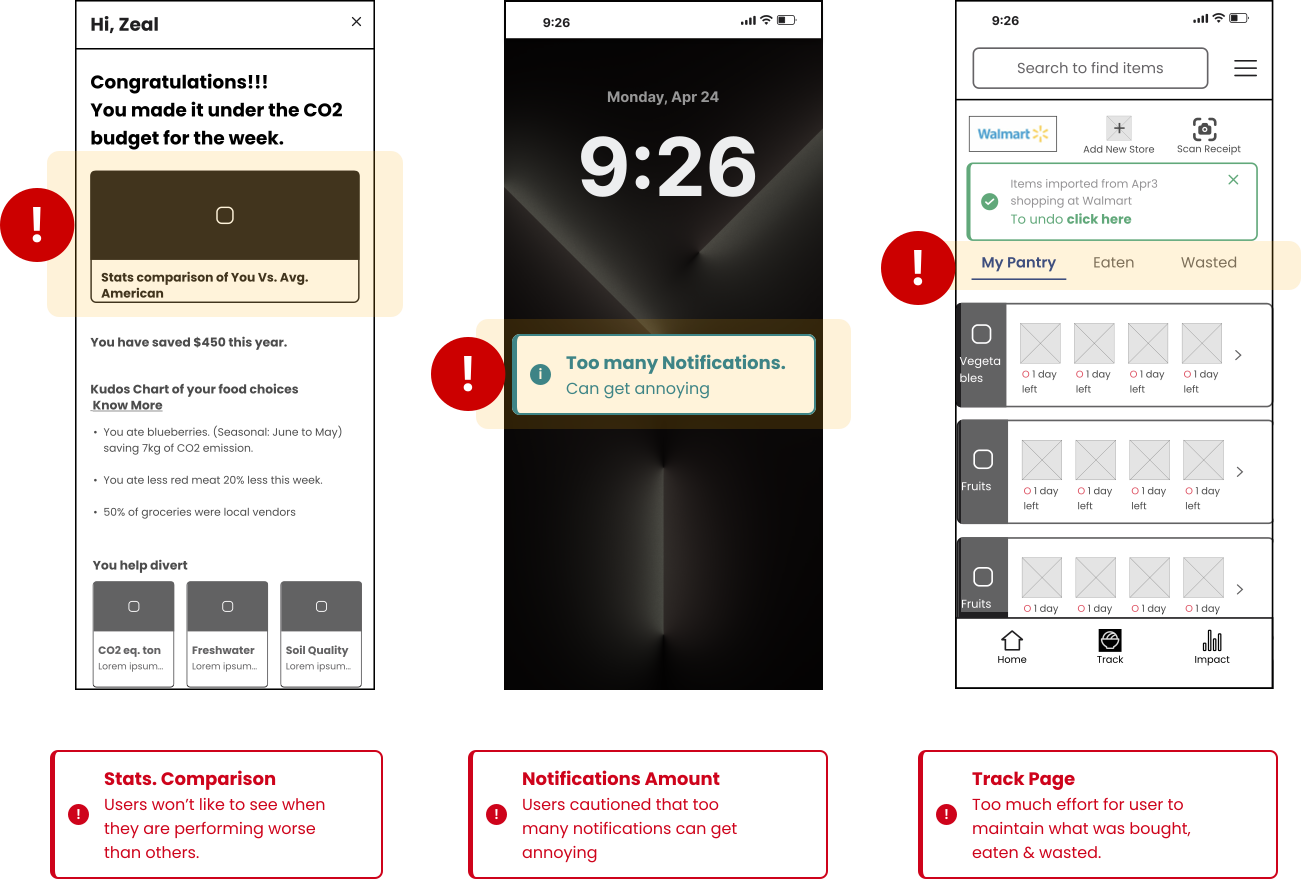
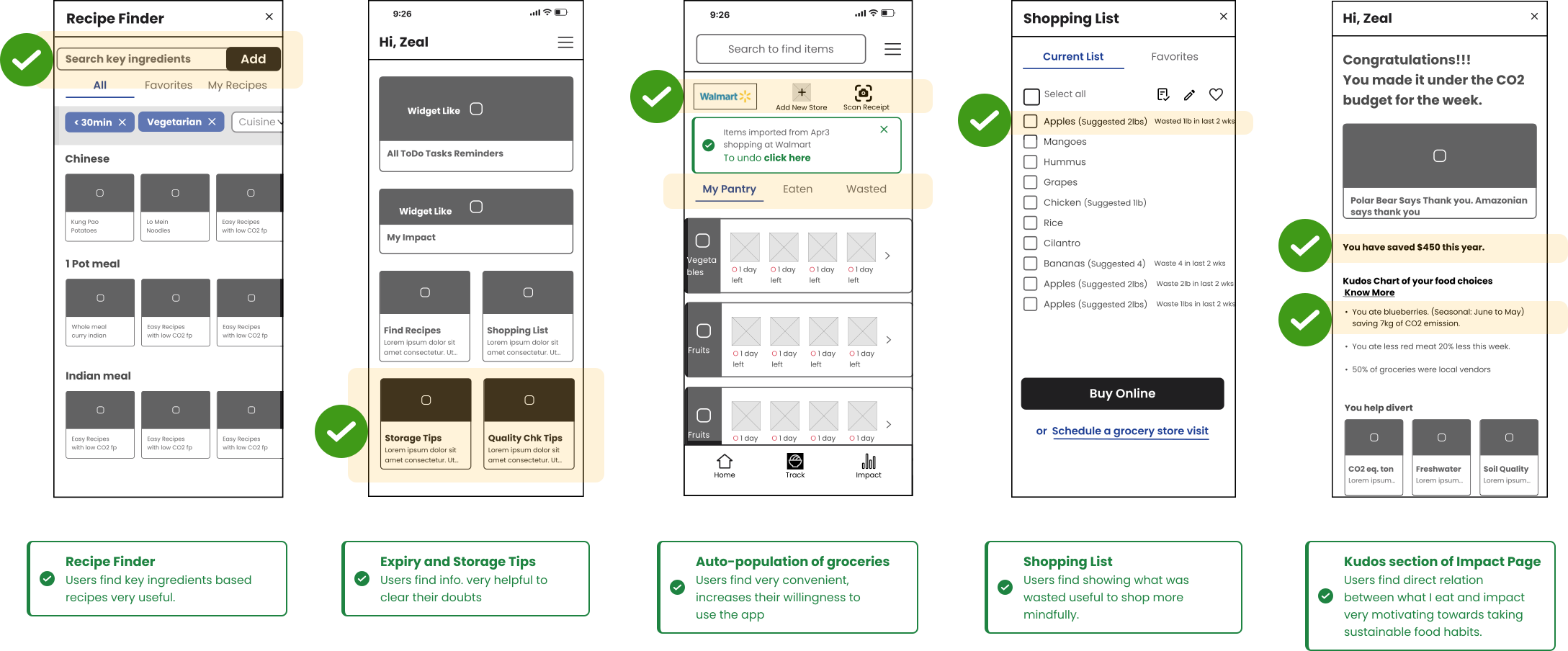
Below are some feedback highlights from the usability testing.
The Solution
To help reduce food waste, I designed features like ‘Fridge Items Reminders’, ‘Finding Relevant Recipes’, ‘Storage Tips’. To raise awareness about health and climate impact of food, I introduced features like Nutri-scores, Eco-scores.
Below are the key features:
1. Auto-Loading Pantry
- Users can integrate their store to auto-load grocery purchases in the ‘Pantry’ Section.
- Users can add FoodConscious Card to Apple Wallet and scan it while billing in-store.
2. Know Your Food
- Users can get ‘Storage Tips’ helping them store fresh produce longer.
- Users can get info. on ‘When food has gone bad‘ helping them avoid getting misled by expiry dates.
- Users can get ‘Nutri-Score‘ - A (Healthiest) to E (Very Unhealthy), helping them eat healthy.
- Users can get ‘Eco-Score‘ - A (Eco-Friendly) to E (Very UnFriendly), helping them make sustainable food choices.
3. Recipe Recommendation
- Users can find recipes with key ingredients.
- Users can set other filters like Time, Cuisine, Diet Preferences etc. while searching for recipes.
- Users can independently search for recipes even if they don’t maintain ‘Pantry’ up-to-date.
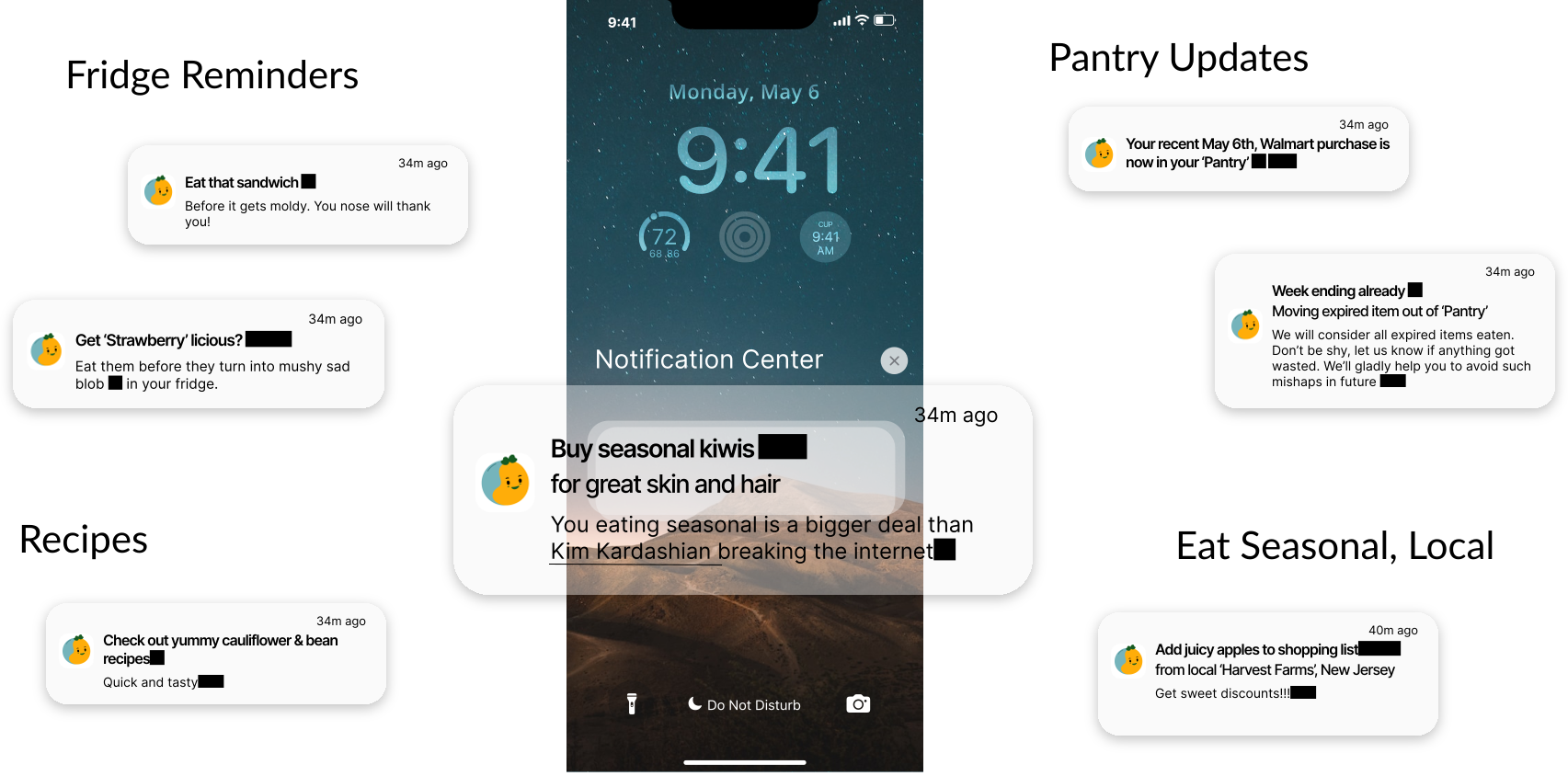
4. Notifications
To create empathy towards food, with suggestive actions and sense of humor (to avoid a nagging vibe.)
Visual Design
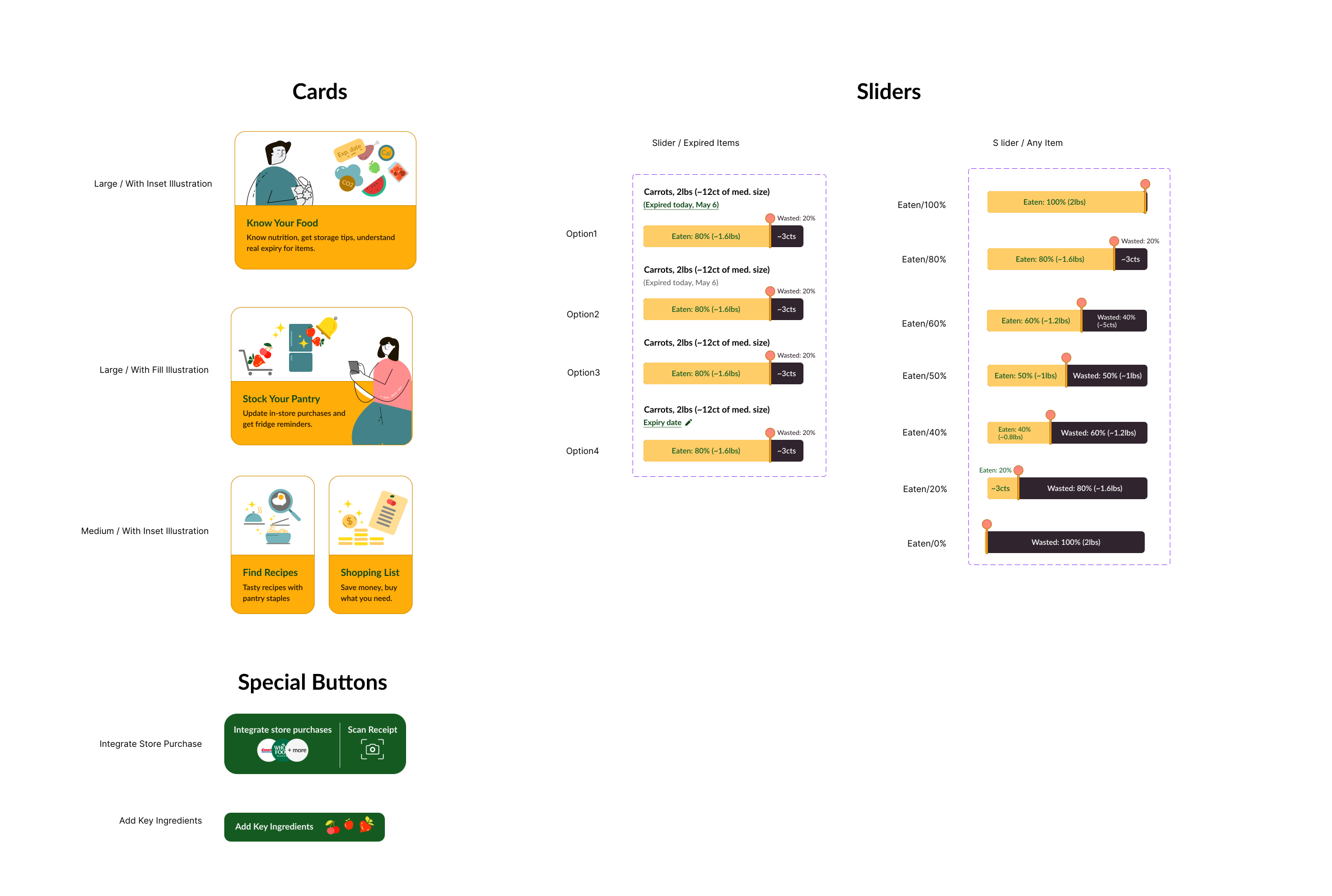
I wanted the app to have a casual friendly vibe and visually echo the message about food and sustainability. With this in mind I created below pattern libraries to appealing user’s visceral & emotional side.
Impact & Learnings
Our Hi-Fidelity Mockups were tested with 7 users (30-40yrs age range), and we found,
My Learnings: Understanding intrinsic and extrinsic motivation of users is very important to design an app that they would use regularly. Designing pattern libraries helps keep the visual language cohesive, reduces errors and expedites design process with introduction of every new feature. The more the work expected from users, the lesser the chance of user to actually use the app.
Finally, if I had more time 🤔, I would observe user behavior over longer duration like 6 months to get better understanding of user’s food habits and accordingly design features that would create real impact. I would work on designing features that can make habit following for fun and intuitive. Use persuasive design principles like ‘Scarcity’, ‘Authority’, ‘Small Commitments before Big Act‘, ‘Role Modelling bias‘, ‘Hooked Model‘ ethically to change user’s attitude towards food.