Multimodal AI Conversational Assistant for Events Platform
Transformed attendees experience of conferences and events with Eventz.ai, an AI-powered events discovery and networking platform.
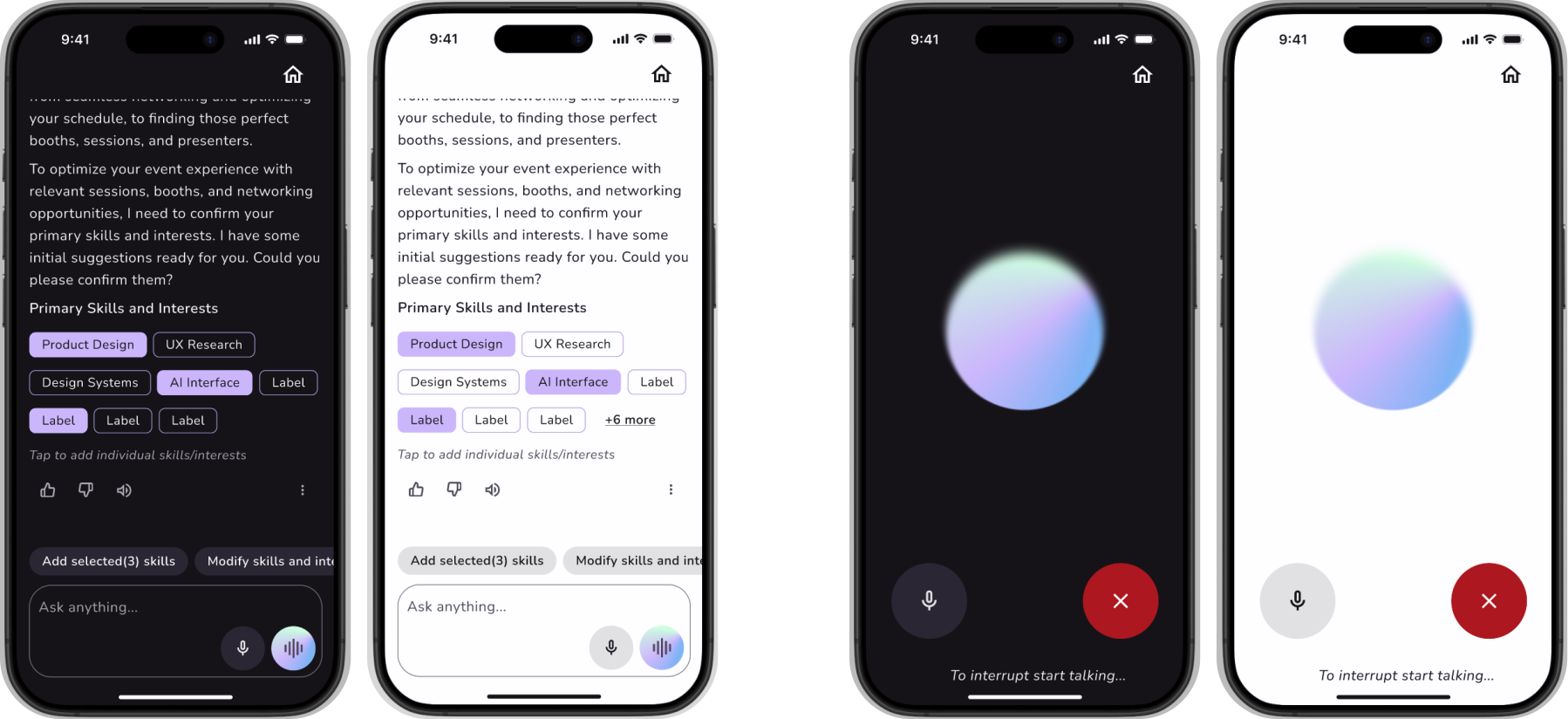
Overview
Attendees at professional events struggle with an overwhelming event experience from scattered agendas, difficulty finding relevant sessions, a constant state of FOMO (fear of missing out), and post-event "follow-up fatigue." The traditional event website offers all information at once, but with no guidance or personalization, leaving attendees feeling disoriented and disconnected.
Eventz.ai app transforms the way attendees experience conferences and events. Our goal was to design an AI-first event assistant that would personalize, guide, and streamline the user journey.
My Contribution
End-to-end AI Conversational Assistant Design, Visual Design, Accessibility Checks, AI Conversational Flow, Defining Success & AI UXEvals
The Outcome
- Achieved a 3X increase in the speed of ideation and prototyping by integrating AI-powered workflows.
- Reduced the AI conversation length by 50%, ensuring users receive their first recommendation with minimal friction.
- Streamlined the user journey, requiring users to answer only 3-4 questions on average before receiving personalized recommendations.
- Ensured the application fully adheres to WCAG 2.0 accessibility standards, creating a more inclusive user experience.
The Problem
On conducting qualitative interviews we discovered key problems through user journey from Pre-event, Event arrival, During event and Post event stage.
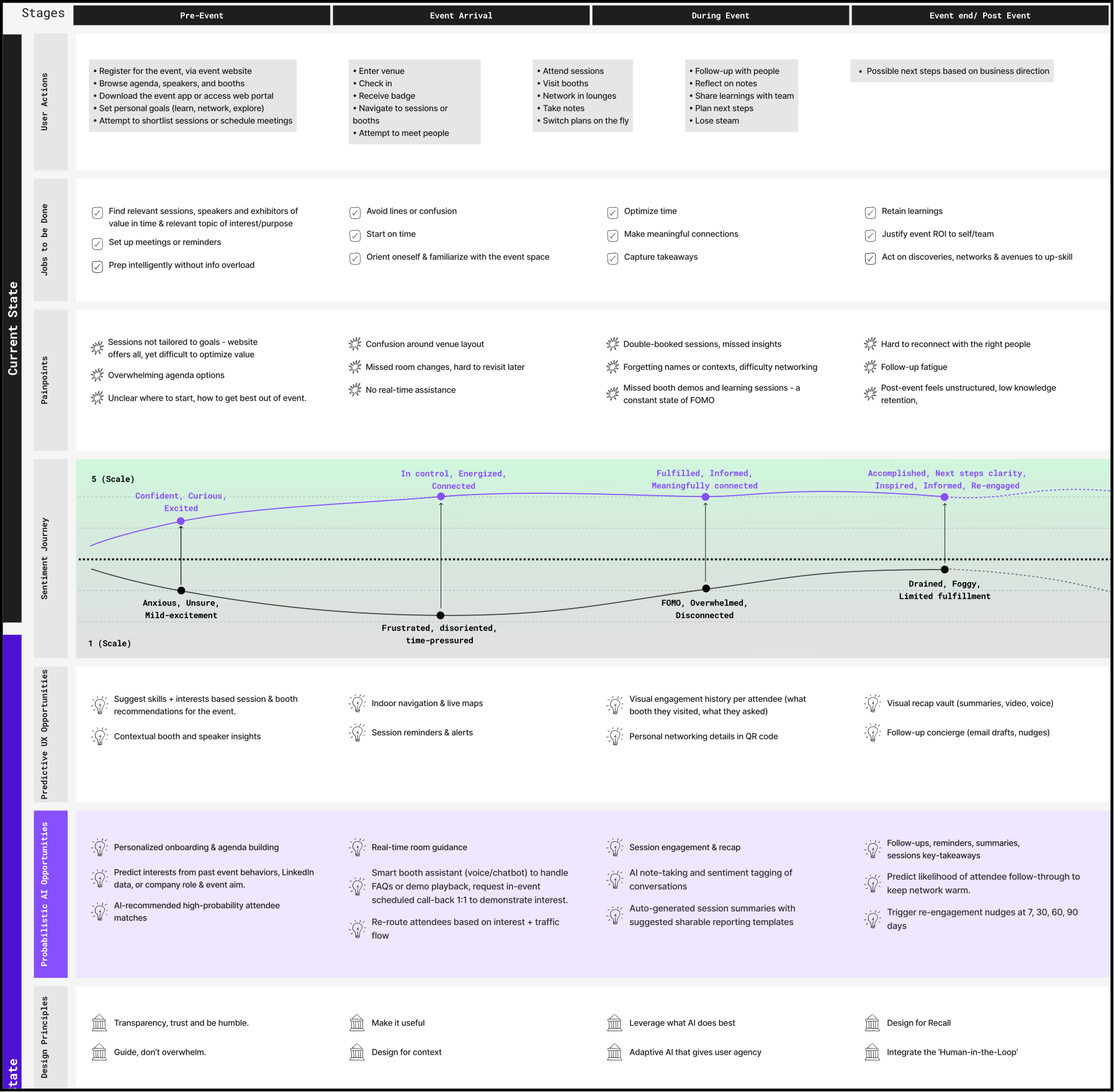
"How might we help users find the relevant session, booths and people to network with?"
Key User Painpoints
- Pre-Event: Overwhelming agendas and difficulty finding relevant sessions or people.
- During Event: Confusion with navigating venue for sessions, booths, and difficulty making meaningful connections.
- Post-Event: "Follow-up fatigue" and poor knowledge retention.
Design Process
To solve this, we implemented a personalized AI-first event assistant that would guide users with relevant event recommendation and networking opportunities. Our hypothesis was a well-prepared attendee is more likely to have a high-value experience.
For the design, I adopted an AI-accelerated design process involving Quick AI-enabled Prototyping, Peer Review and Team Feedback, and subsequent Design Iterations
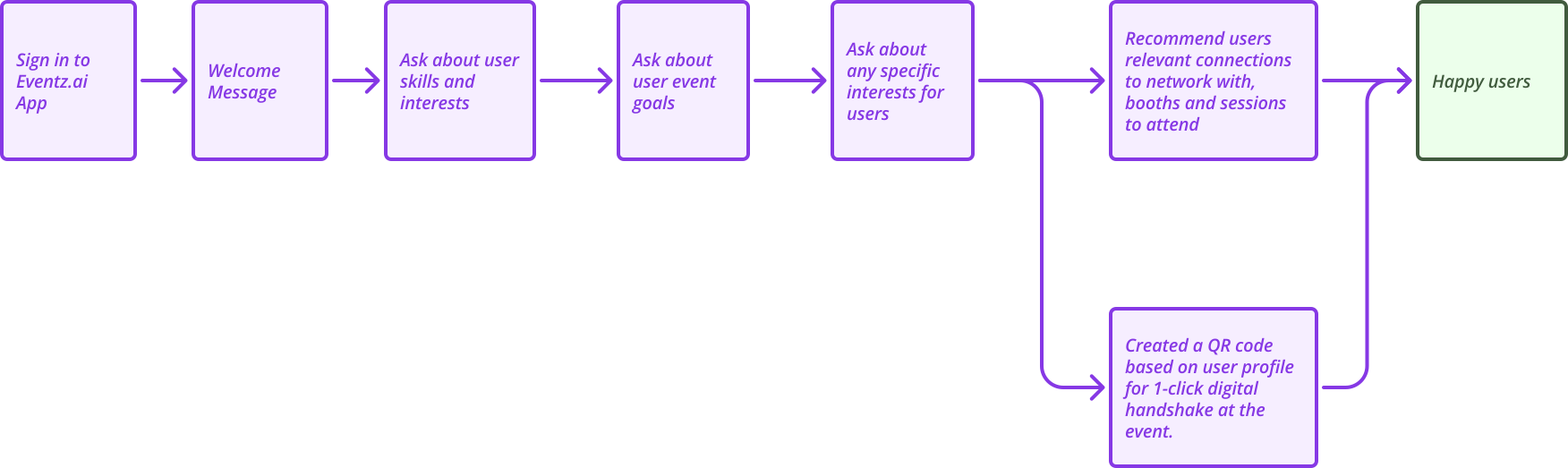
1. Pre-Event Attendee Conversation Flow
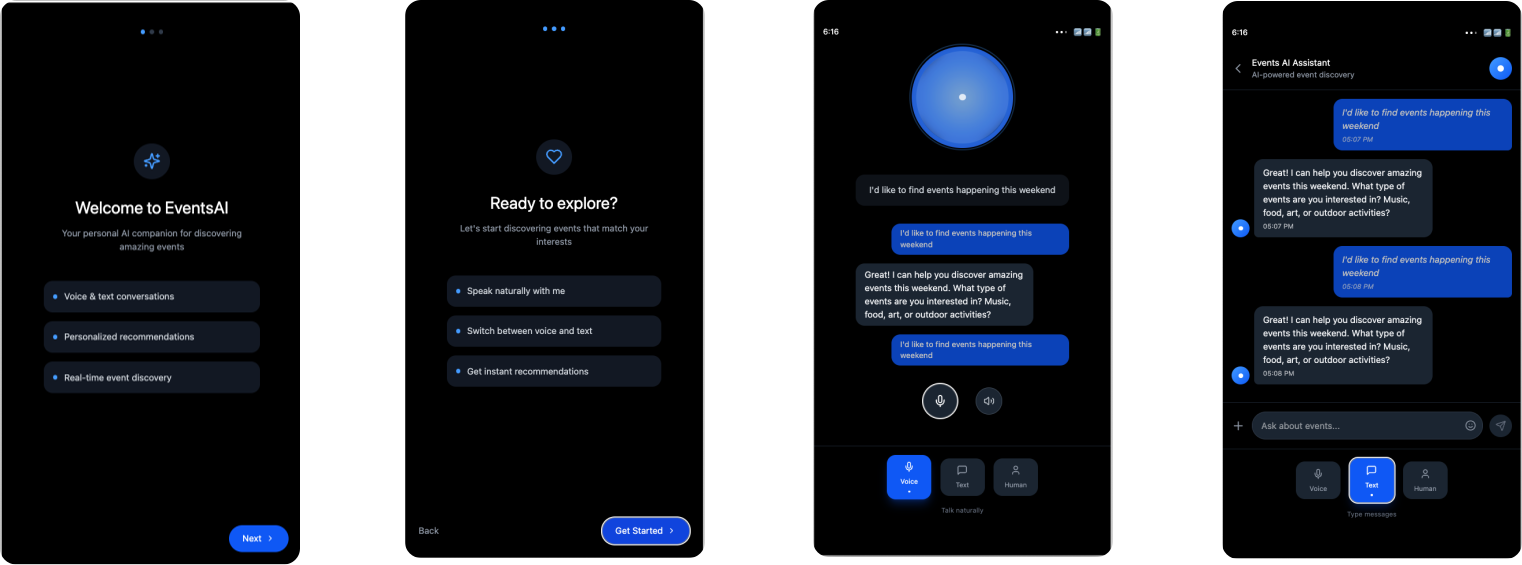
2. Quick AI Prototyping
Using FigmaMake to quickly translating ideas into prototypes. This served as a solid foundation for in-depth idea discussions, critique, and analysis of effective & ineffective elements.
3. Visual Design Iterations
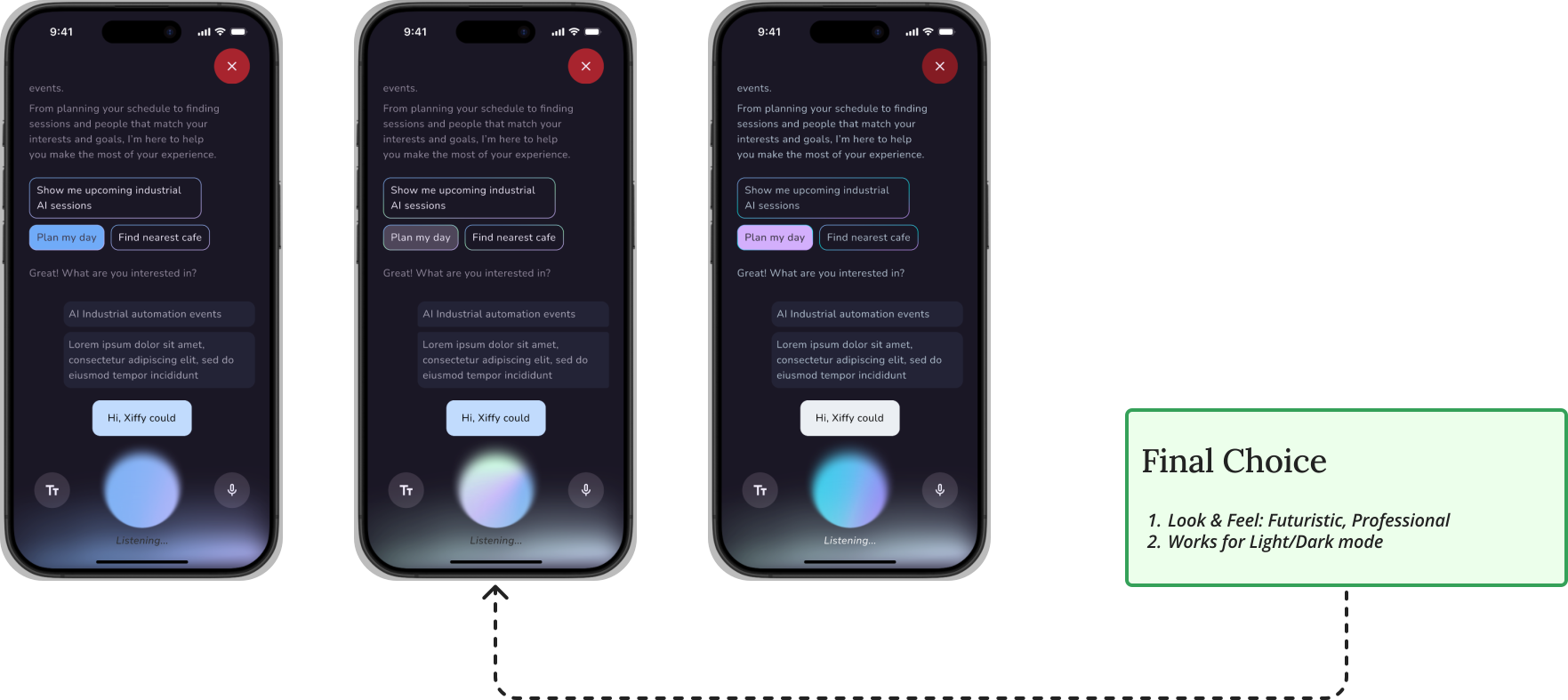

The Solution
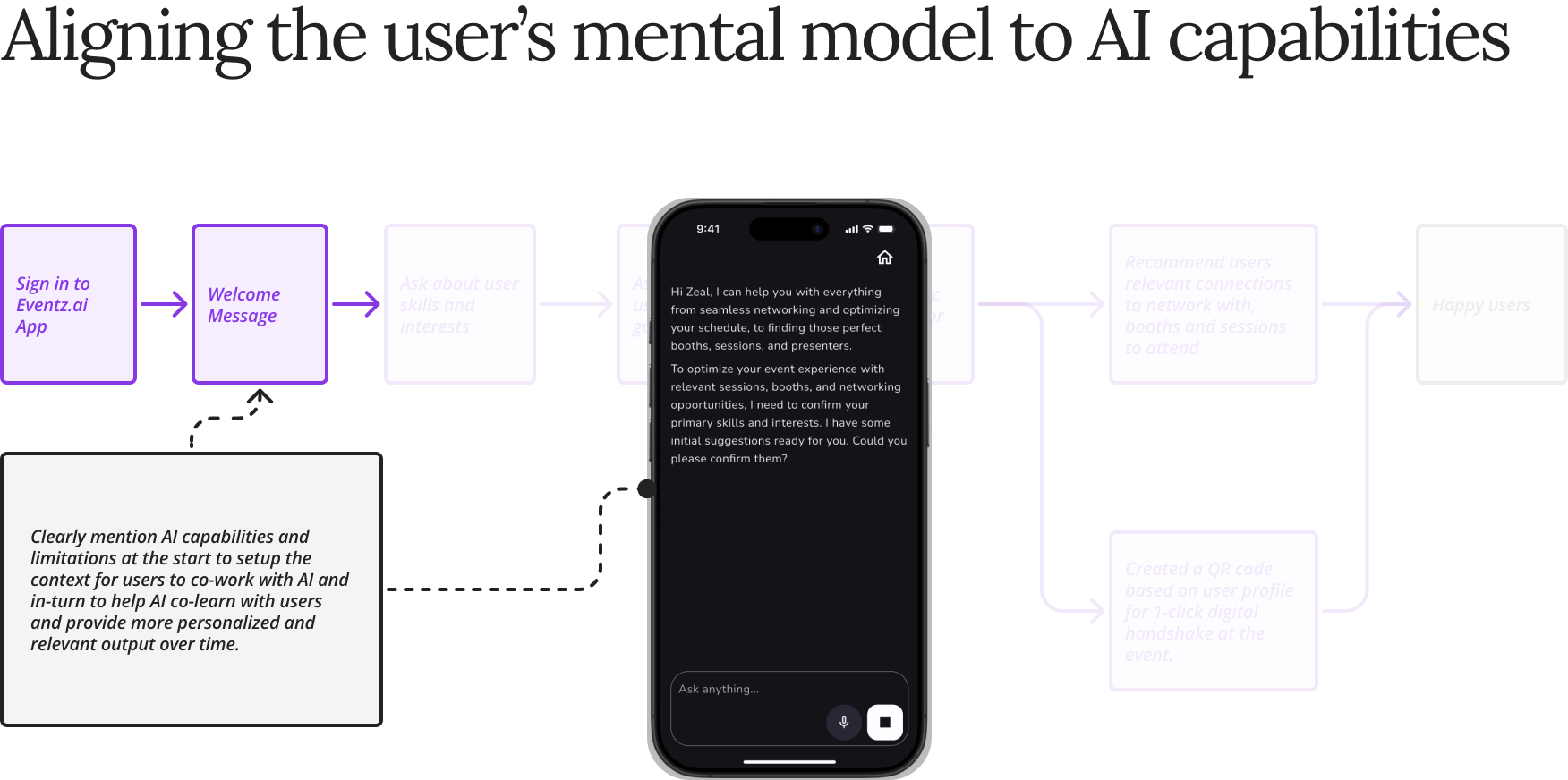
Based on the user feedback and insights, we implemented multimodal AI Conversation assistant following Google's PAIR (People + AI Research) guidelines to be effective, functional, transparent, trusting, context-aware, adaptive and handle errors gracefully. We also ensured the application fully adheres to WCAG 2.0 accessibility standards, creating a more inclusive user experience and follows AI guardrails to avoid any unethical or unsafe behavior.
A/B Testing Process: Group A (Control) will receive a generic, non-personalized list of popular sessions and speakers. Group B (Test) interacts with the conversational AI to generate personalized recommendations based on their stated interests (e.g., job title, industry, topics they select).Track the number of sessions, speakers, and contacts each user adds to their personal agenda for pre-event stage.
To know more contact zealsheth13@gmail.com
Impact & Learnings
The redesign successfully shifted user behavior from manual tracking to automated insights, resulting in a significantly more engaged user base.
My Learnings: Designing multimodal, responsible, context-aware and adaptive AI interfaces. Designing humans and probabilistic AI to work together. End-to-end product design strategy.